Posts

Showing posts with the label Crusing

The Bilge Blower

Image
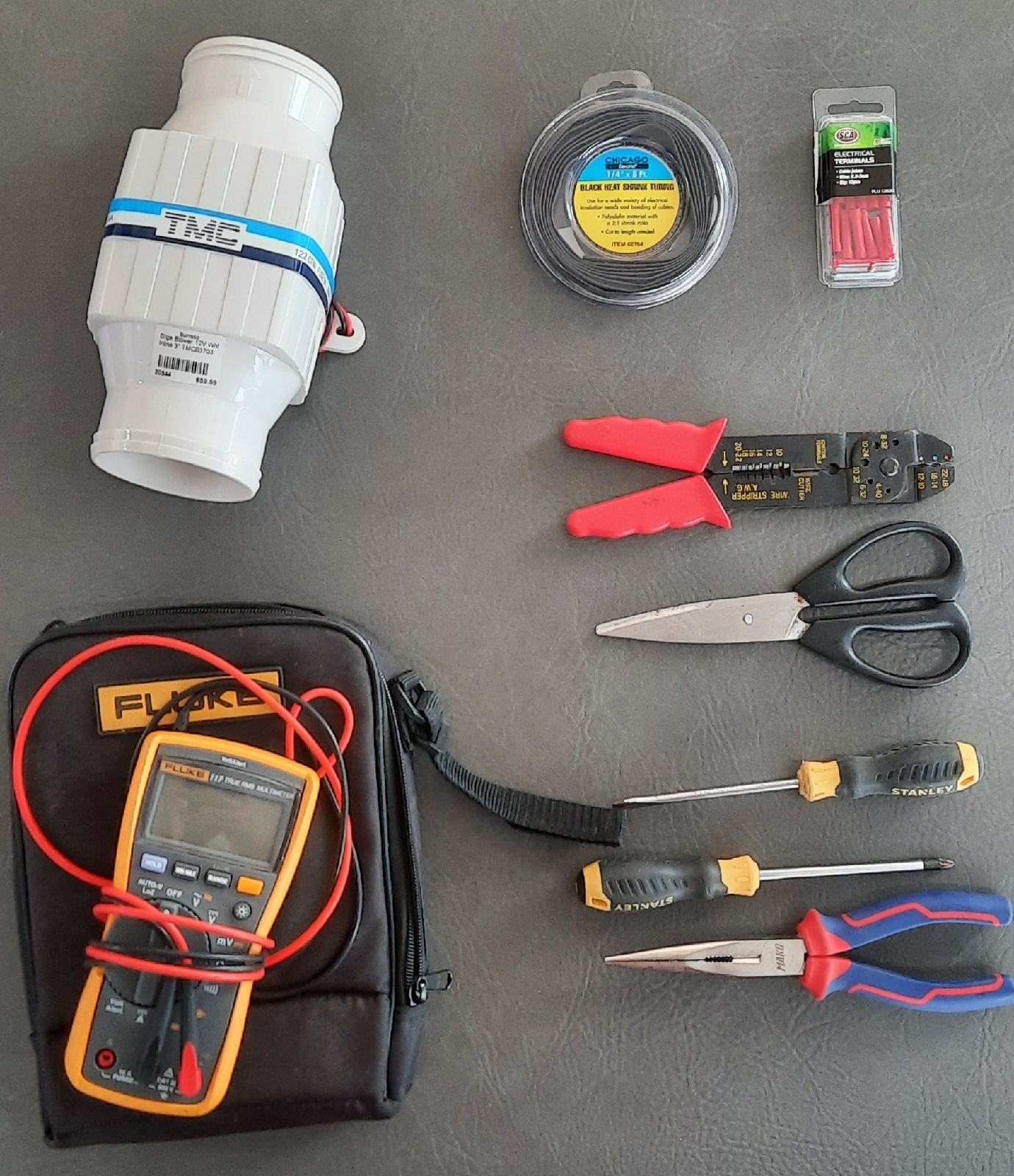
Our bilge blowers are Rule 24v 76mm. I know this because one recently died. This is how you get to know your boat better. By focusing on an area each time essential repairs or preventative maintenance is needed. It really confused me to find the 24v version installed as my boat is 12v, so where would the fan get 24v from? I could see it connected to a relay, perhaps that increased the voltage supplied to the fan somehow? I measured just over 13v with my trusty Fluke multimeter. This means the 24v fan was only running 1/2 speed. Sourcing direct replacement parts was difficult. Both Burnsco and L&P told me there were no 3" 24v blowers in the country. The 24v version is not commonly used and I worried that switching to 12v might cause problems.  It may still be possible to repair the old rule blower by cleaning the motor brushes. But I decided to just replace them with 12v blowers instead. I also decided on the TMC model. The ends of the TMC blower are still 3" but the housi...

Make your own parts with Sikaflex

Image
The sea is a harsh environment, and even sturdy marinized gear breaks down. 4 years of UV damage has turned my Lewmar #4 track stops into crumble.  This is why I found myself making do with a tube of Sika 291 and a bar of soap to replace my track rubber stops. Out in the wilder parts of the world there is not the same access to parts and services that we are used to in the West. Sometimes you need to get a little bit creative when cruising. Even out in New Zealand some parts can be hard to source. Although my track stops were on order, the expected delivery would take months. I decided to try a temporary replacement. With my last intact rubber stop, and a bar of soap, I heated the soap, and when it softened, enough, I stirred it, put in the rubber stop and waited for it to cool down.  I carefully removed the rubber stop, and with my new mould, and a tube of sika 291, I made up enough temporary stops to get by until the replacements arrived. The lesson I learned is that Sika 29...

Pacific castaway: Marooned for months amid pandemic

Image
In 2019 we spent a week exploring the remote Darien river, the natural jungle border between Panama and Columbia. We had just sailed out of one creek when we saw two yachts heading up the next inlet. Over the radio we heard "Oh! We have company".  "Yeah, but he must be a local, he's got his sail up". That is how we met Agape and Halcyon.  This is the account of their lockdown on a boat, on the other side of the world. It's an inspiring read, deep, and thoughtful.  You can tell they have been on a voyage, and learned lessons on the way. Yachting Wolrd : Pacif Castaway

Americas Cup - 2021 - Race 9

Image
Yesterday I said, light winds in the Americas Cup were more exciting as they add the possibility of the boats falling off their foils. Today I have to eat my words. Stronger winds are just as exciting, especially in boats so evenly matched. Watch race 9 here.  https://www.facebook.com/groups/2411813889062536/permalink/2852516351658952/ By now the sailing characteristic of both boats are known by all. Luna Rossa can point higher, but Emirates can sail faster, and make better VMG on downwind legs. Considering the size and speed of these boats the sailing is close! Race 7 and 8 saw passes, lead changes, close starts, and boats coming off their foils.  Skipper of American Magic Dean Barker stated in the TVNZ coverage  "It was the most bizzare race." Today, the wind strrength was up, we saw 12 - 18kts, averaging around 15kts, the teams were practicing on the course, and different jibs were going up and down. There was a sense that the days racing would be even more exciting th...

Essential options - davits

Image
I'm so thankful for our davits. On the Open 40 it means that raising and lowering the dingy with the 3:1 pulley setup is simple and can be done with minimal effort.  We are in our fourth year as liveaboards over 20,000 nm sailed. We have left our Highfield CL130 with Suzuki 9.9 outboard on the davits throughout. That's pretty good going, to think that we can prepare the dingy to cross an ocean in under three minutes.  Often overlooked when securing the dingy are the cleats placed specifically to stop sideways movement. It's horrible to see someone sailing along with the dingy crashing from side to side, when it is so simple to tie up.  To secure it from sideways movement:  Lift up the dingy, aim to get the dingy side tucked in right up to the bottom of the davits.  Take the painter to the cleat just behind the main sheet winch, and tighten the so that the side of the dingy presses firmly up against the back of the boat.  Take a line from the stern of the di...